
This section breaks down the key features of a padel racket and explains how each one influences performance on court. From weight and balance to racket shape, materials and core construction, you’ll learn how these specifications affect power, control, spin, comfort and manoeuvrability. Understanding these elements will help you make a more informed choice when selecting the right racket for your playing style.

Weight
The weight of a padel racket affects stability, power, manoeuvrability, and how easy it is to generate racket-head speed. Heavier rackets tend to offer greater stability and power on impact, particularly against fast balls, while lighter rackets are easier to manoeuvre and quicker through the air.
In general, lighter padel rackets are around 330–350g, making them easier to handle and well suited to beginners, developing players, and those who prioritise speed. Mid-weight rackets typically sit around 350–365g, offering a balance of manoeuvrability, stability, and power, while heavier rackets range from around 365–380g, providing greater stability, plough-through, and power for experienced players.

Head Shape
The shape of a padel racket has a major influence on the location and size of the sweet spot, as well as the balance between power, control, and forgiveness. Round rackets have a more central sweet spot and are generally easier to control, while diamond shapes move more weight towards the top of the racket for greater attacking power. Teardrop shapes sit between the two, offering a balance of power and control.
Round rackets have a larger, more central sweet spot and favour control, tolerance, and manoeuvrability. Teardrop rackets provide a versatile balance between power and control, while diamond rackets have a higher sweet spot and are designed to maximise power for aggressive players.

Balance
The balance of a padel racket describes where its weight is distributed from the handle towards the head. It has a significant effect on how the racket feels when you swing it, with head-heavy rackets generally providing more power and stability, while head-light rackets feel quicker and easier to manoeuvre.
Head-light rackets place more weight towards the handle, making them easier to move and particularly suitable for defensive play and quick reactions. Even-balance rackets distribute the weight more evenly, providing a versatile combination of power, control, and manoeuvrability. Head-heavy rackets place more weight towards the head, increasing stability and potential power, particularly on smashes and attacking shots.

Composition
The materials used throughout a padel racket influence its stiffness, comfort, power, responsiveness, and forgiveness. The main materials you'll encounter are carbon fibre, fibreglass, and EVA foam, with the frame, racket face, and core working together to determine how the racket performs.
Carbon fibre is stiffer and more responsive, providing a firmer feel and greater energy transfer for experienced players. Fibreglass is more flexible and forgiving, creating a softer feel and easier power. Babolat also combines carbon and fibreglass in its Carbon Flex construction to create a balance between responsiveness and flexibility. The core, typically made from EVA foam, also affects how hard or soft the racket feels and how it responds to impact.
Our general Recommendations for Every Player
Find the ideal padel racket for your game, designed to match your playing style, ability, and performance needs. Whether you’re new to padel or an experienced player looking to improve control, power, manoeuvrability, or attacking performance, our guide helps you identify what suits you best. Each category explains the type of player and style it is intended for, making it simple to match your game with the right racket.
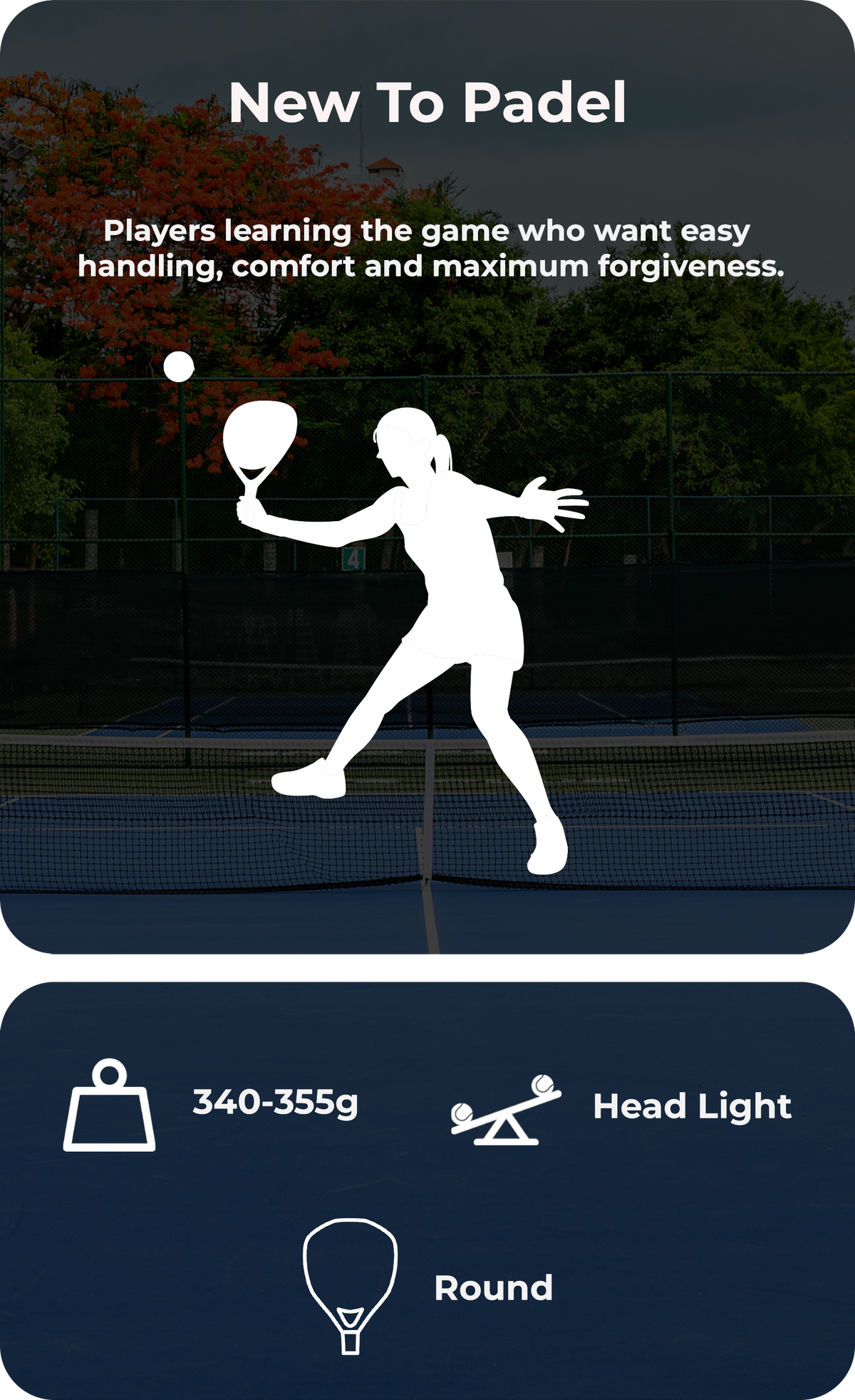
These rackets are designed to make learning padel as easy and enjoyable as possible. Typically weighing between 340–355g with a round shape, they provide a large sweet spot, excellent forgiveness, and easy control on off-centre shots. Their head-light balance makes them comfortable to swing and ideal for players building confidence, consistency, and basic technique.
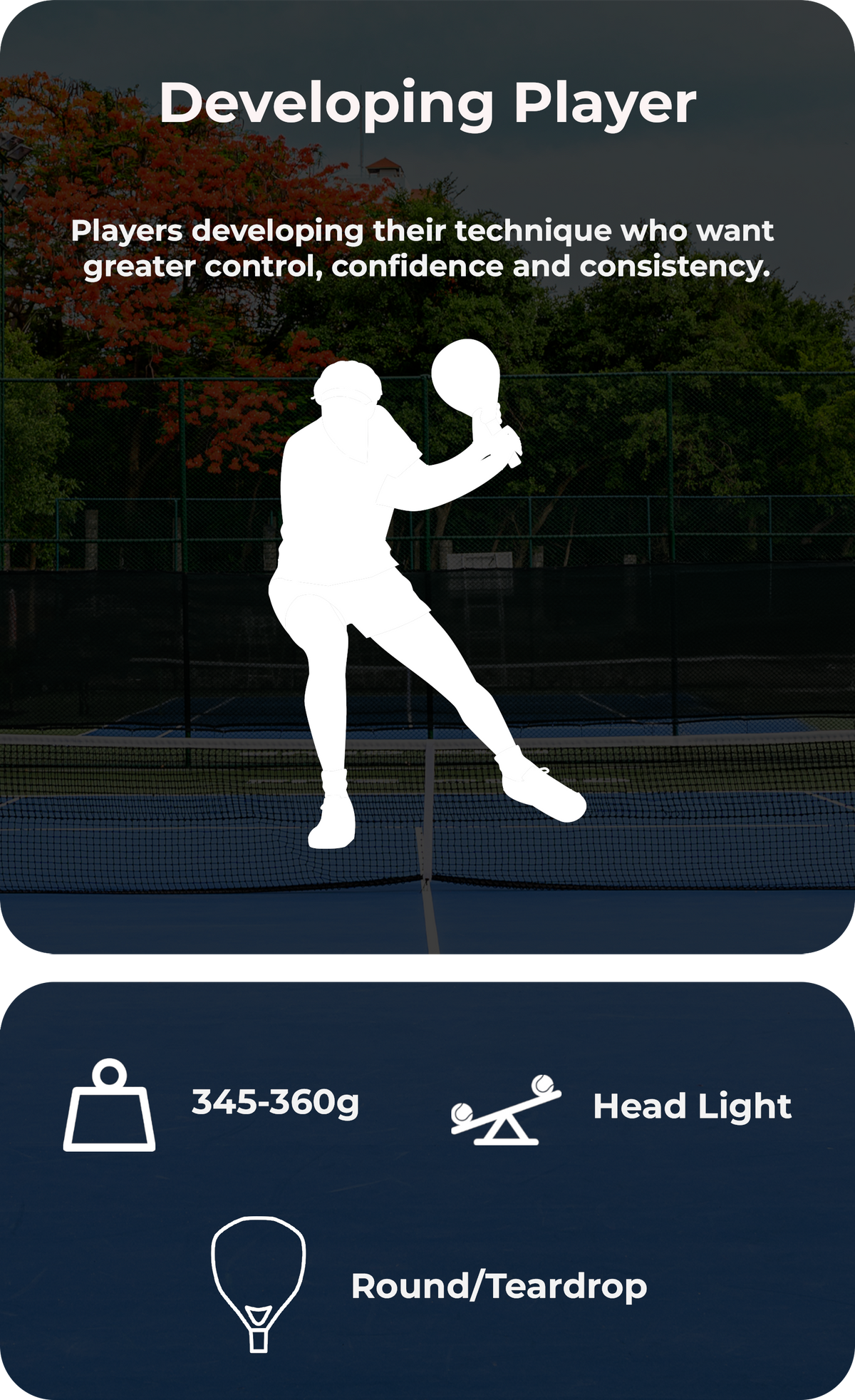
These rackets are designed for players who have mastered the basics and are developing their technique. Typically weighing between 345–360g with a round or teardrop shape, they offer a forgiving sweet spot alongside improved stability and accessible power. Their even balance provides a versatile feel, making them ideal for players becoming more confident from both the back of the court and at the net.
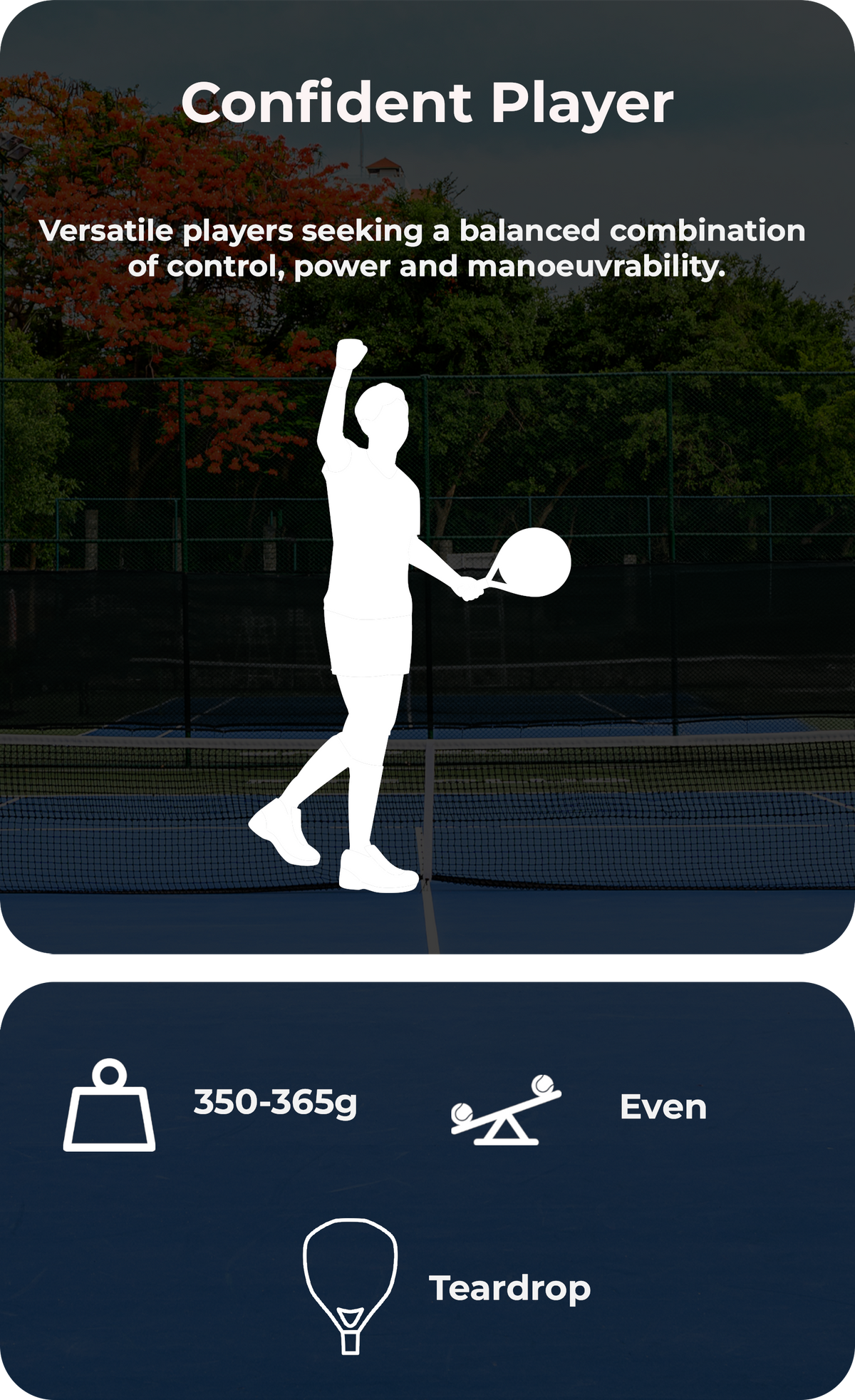
These rackets are designed for confident players who are comfortable defending from the back of the court and attacking at the net. Typically weighing between 350–365g with a teardrop shape, they provide a balanced combination of control, power, and manoeuvrability. Their even balance makes them versatile across the court and well suited to players developing a complete all-court game.
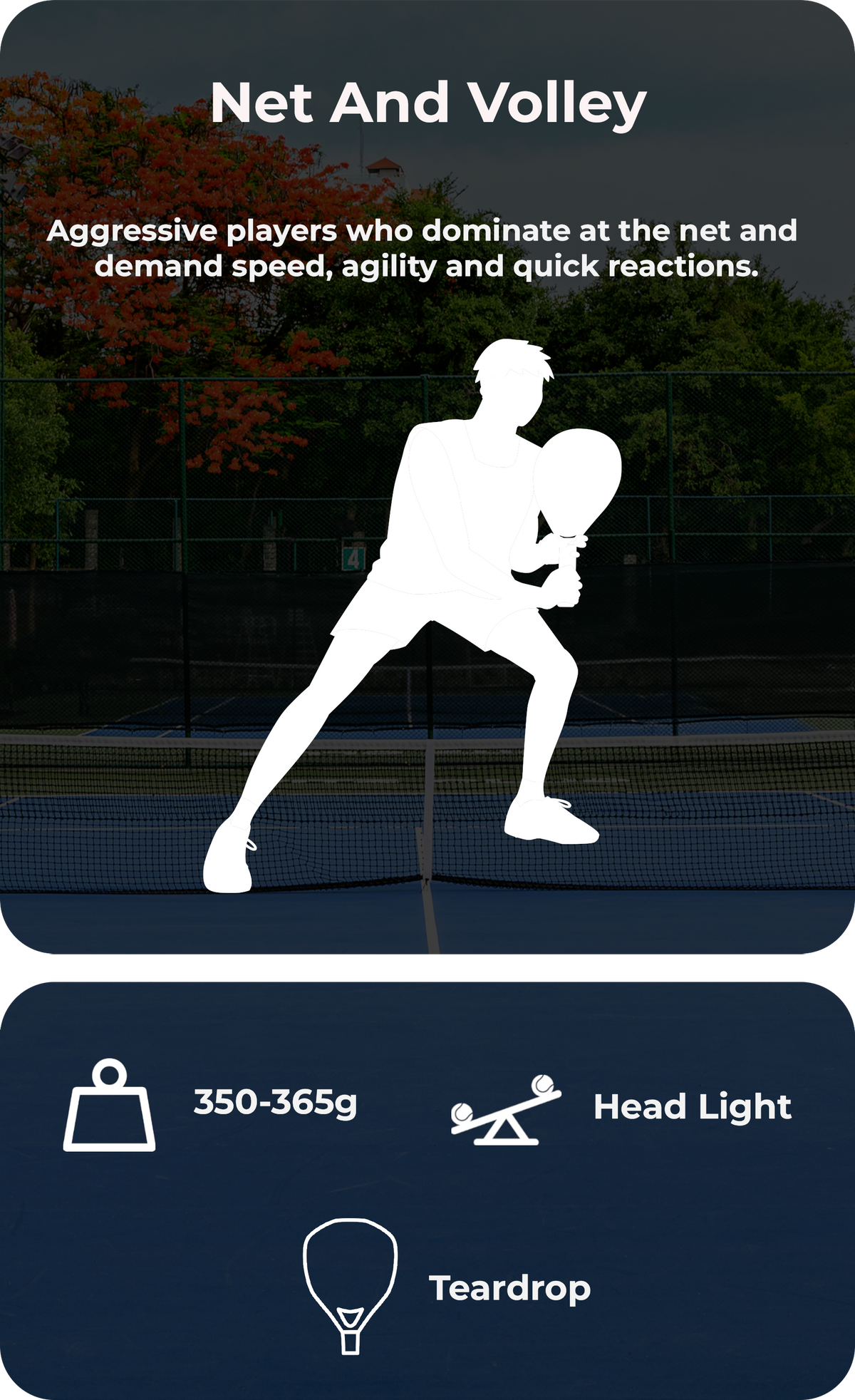
These rackets are designed for aggressive players who enjoy moving forward and controlling points at the net. Typically weighing between 350–365g with a teardrop shape, they offer a responsive feel with enough stability for volleys while remaining quick through fast exchanges. Their head-light balance makes them particularly easy to manoeuvre, helping players react quickly and position the racket effectively.
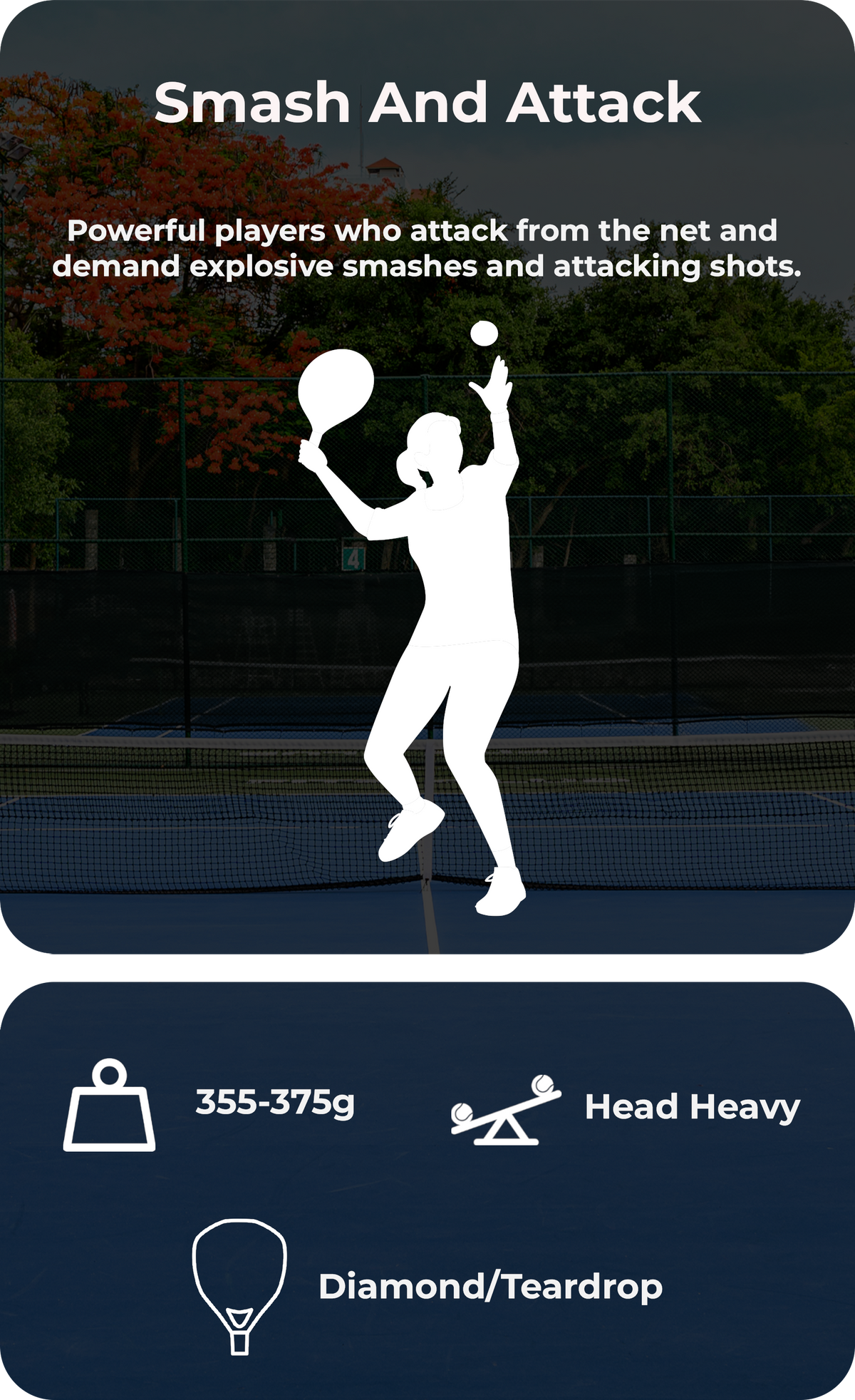
These rackets are designed for aggressive players who look to dominate points with powerful attacking shots and smashes. Typically weighing between 360–375g with a diamond shape, they concentrate more weight towards the top of the racket to maximise leverage and power. Their head-heavy balance provides greater stability and punch, making them ideal for experienced players with strong technique.
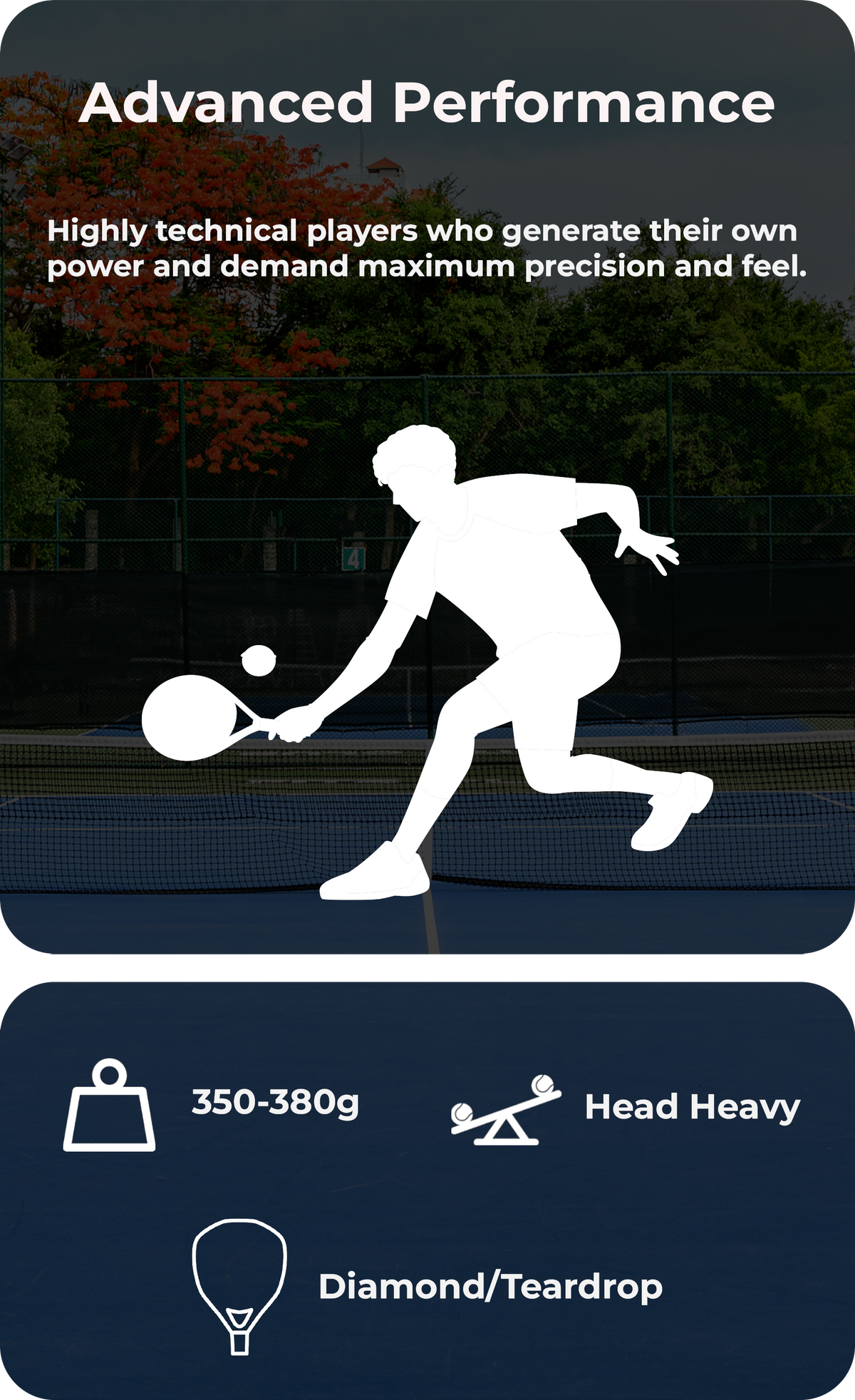
These rackets are designed for highly experienced players who demand maximum performance from every part of their game. Typically weighing between 355–380g with a teardrop or diamond shape, they offer exceptional responsiveness, stability, and precision for technically demanding shots. Their even or head-heavy balance allows players to choose between versatility and maximum attacking performance, depending on their individual style.
a guide to padel racket materials
Fibreglass
Fibreglass is one of the most flexible materials used in padel racket faces. Its softer, more elastic construction helps the racket flex on impact, creating a comfortable feel and making it easier to generate power without requiring maximum swing speed. Fibreglass is generally more forgiving and better at absorbing vibrations, making it particularly suitable for beginners and intermediate players. The trade-off is that it usually provides a less direct, crisp response than carbon.
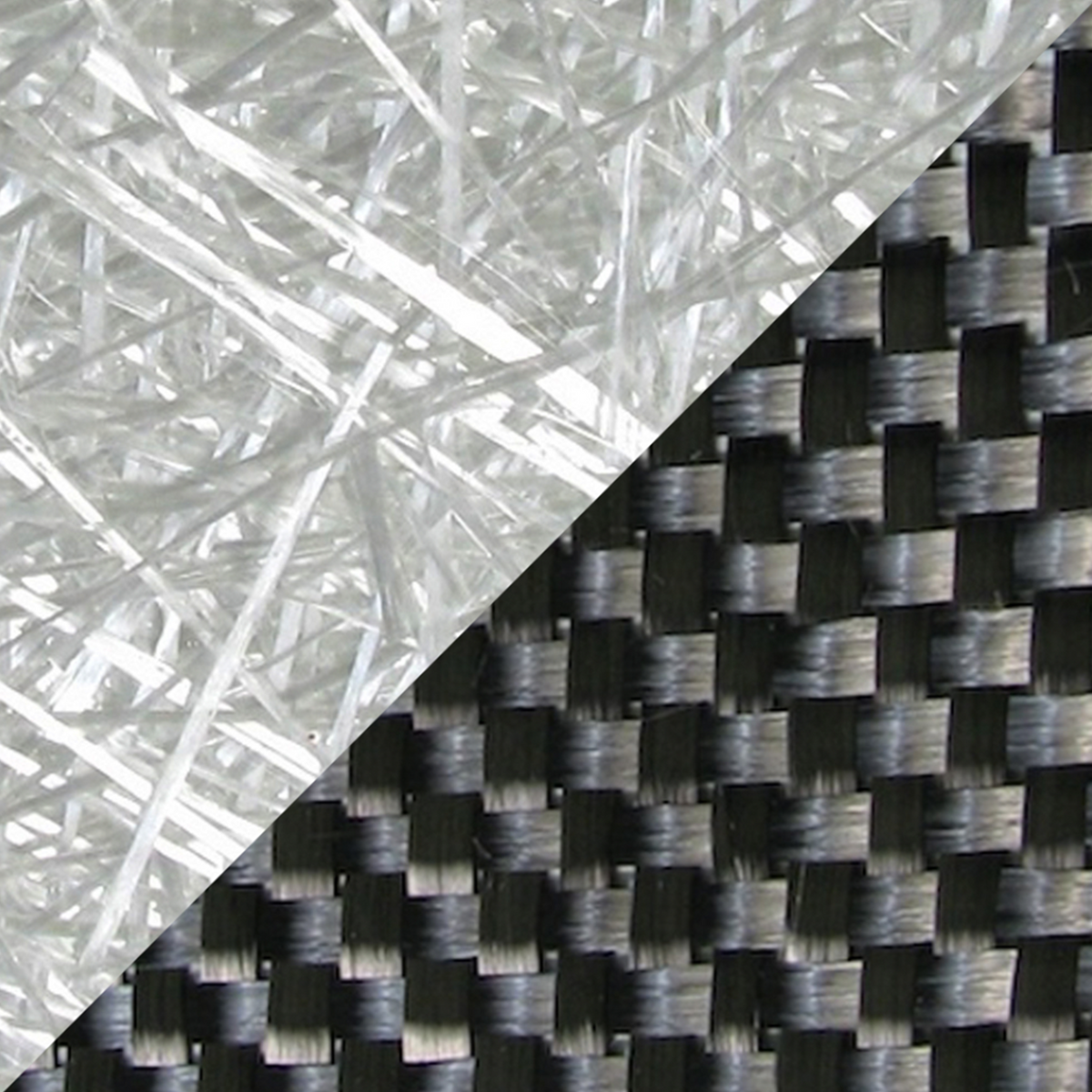
Hybrid / Carbon & Fibreglass Weaves
Hybrid constructions combine carbon and fibreglass within the racket face to balance the benefits of both materials. Carbon adds stiffness, responsiveness and a more direct feel, while fibreglass contributes flexibility, comfort and easier power. By combining the two, manufacturers can create a racket that feels more responsive than full fibreglass but more comfortable and forgiving than full carbon. The exact characteristics depend heavily on the ratio and construction used, so different hybrid rackets can still feel very different on court.
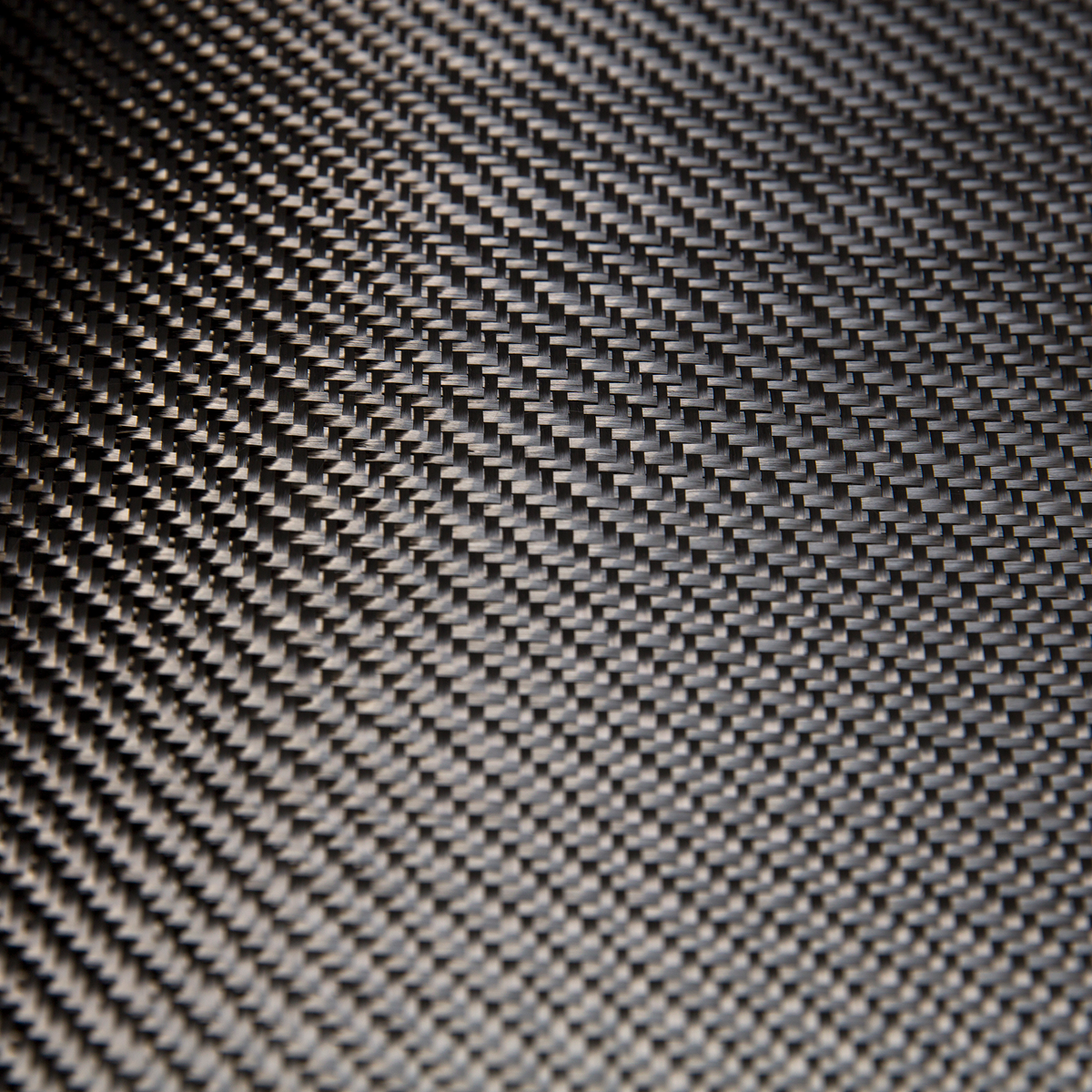
Full Carbon and Carbon Grades
Full carbon rackets use carbon fibre across the racket face, generally creating a firmer, more responsive and precise feel than fibreglass or hybrid constructions. The “K” rating, such as 3K, 12K or 18K, refers to the approximate number of carbon filaments bundled into each tow used to create the weave: 3K contains around 3,000 filaments, while 12K contains around 12,000.
Lower-K carbon, such as 3K or 6K, typically uses a finer weave and is often found in premium control and performance rackets where a precise, responsive feel is important. Mid-range ratings such as 12K are commonly used to balance responsiveness, stability and feel, while higher ratings such as 18K and 24K are often used in more powerful, high-performance constructions. However, these differences should be viewed as general trends rather than fixed rules. A higher K number does not automatically mean more power, stiffness or overall performance, as the thickness of the carbon, weave pattern, resin, number of layers, core and overall racket construction all have a major influence on how the racket plays. Different K ratings are therefore best understood as different types of carbon construction, each contributing to the racket’s overall feel and response.
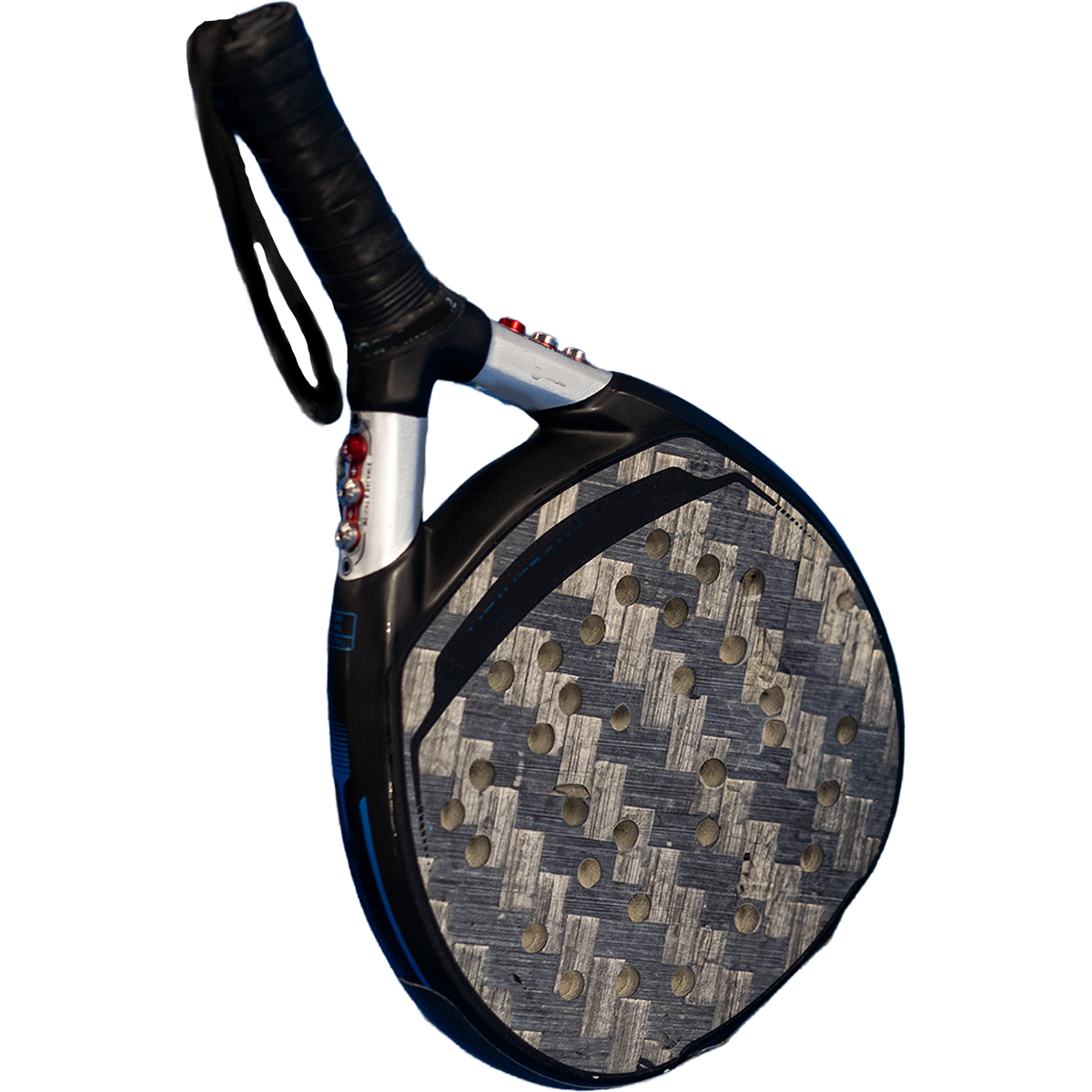
Carbon Face vs carbon frame
A carbon face directly influences the racket's feel when striking the ball, generally creating greater responsiveness, stability and precision. A carbon frame, however, primarily reinforces the structure of the racket, helping it maintain rigidity and resist deformation on impact. A racket may therefore have a fibreglass face but a carbon frame, providing the soft, forgiving feel of fibreglass while benefiting from the additional stability of a carbon structure. Having carbon in the frame does not mean the face will feel like a full-carbon racket, as the surface material remains the most noticeable factor at impact.
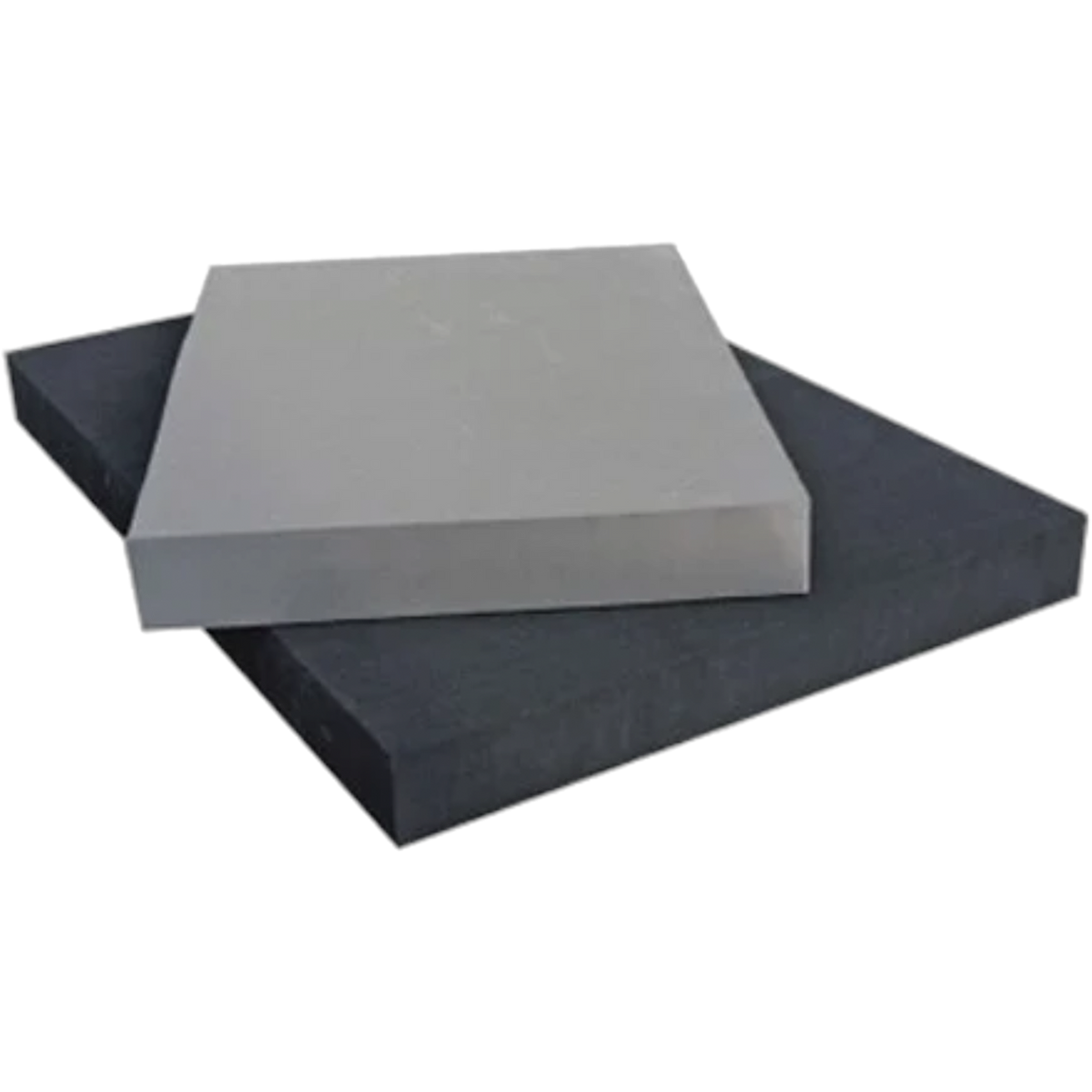
EVA foam and cores
The EVA foam core is one of the biggest factors affecting how a padel racket feels. Softer EVA foams compress more easily on impact, providing greater comfort, vibration absorption and easier power at slower swing speeds. Medium-density foams aim to balance comfort with responsiveness, while harder EVA foams deform less and generally provide a firmer, more direct response that rewards players who generate their own racket-head speed. Manufacturers use many different types and densities of EVA, often combining multiple layers or densities within the same core. Because there is no universal industry standard for terms such as “soft” or “hard EVA”, the actual feel can vary significantly between brands and models.